
The Supreme Court Just Settled the AI Copyright Question. Here Is What Every Founder Needs to Know.
AI can be a powerful tool, but founders need to prove human creative involvement if they want to claim ownership over AI-assisted work.
Somewhere right now, a founder is looking at a logo their AI tool generated last week, a set of product descriptions their AI wrote last month, a piece of code documentation their AI drafted this morning, and quietly assuming the same thing almost every founder assumes without ever saying it out loud: I built this with AI, so I own it.
On March 2, 2026, the Supreme Court told them they might be wrong.
Table of Contents
- What Actually Happened
- Why This Is Not an Art World Story
- The Spectrum Every Founder Is Standing On
- The Gray Area Where Most Startups Actually Live
- What the USPTO Has Already Told Us
- Three Things to Do Before This Becomes Your Problem
- What Actually Changed on March 2
What Actually Happened
The case is Thaler v. Perlmutter. Dr. Stephen Thaler built an AI system called DABUS and let it autonomously generate a piece of visual art. He applied for copyright registration and listed the AI itself as the author.
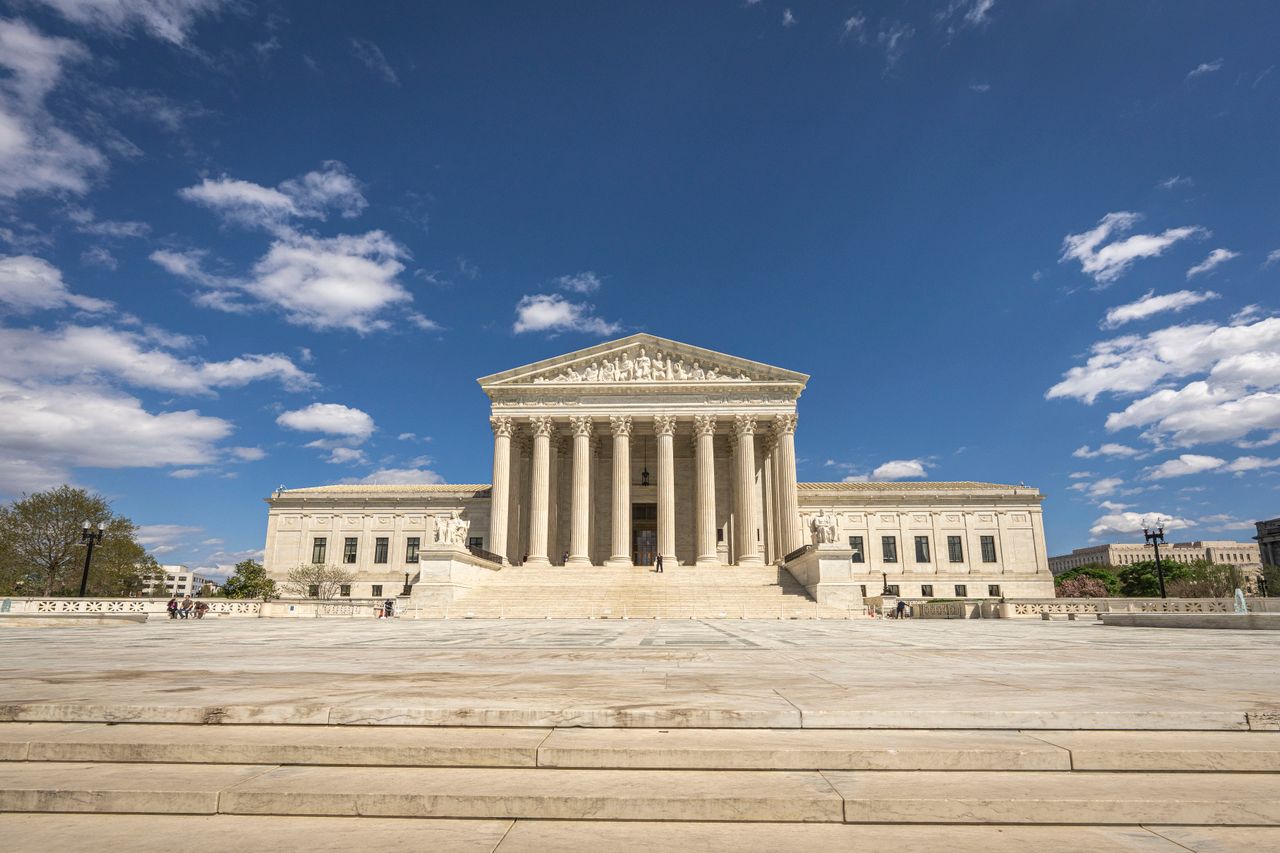
The Copyright Office said no. The district court said no. The D.C. Circuit Court of Appeals said no. And on March 2, 2026, the Supreme Court declined to hear the appeal, letting every one of those rulings stand.
Here is the standard, now settled at every level of the federal court system: human authorship is a bedrock requirement of copyright. A work created solely by AI, with no human creative input, is not protected. Not partially protected. Not protected in some watered down way. Not protected at all.
Say that back to yourself once more, because it is the sentence this entire post is built on. There is no copyright on content your AI made on its own.
Why This Is Not an Art World Story
It is tempting to file this away as a strange footnote. An eccentric scientist tried to get his robot's painting copyrighted, the courts said no, back to your regularly scheduled day.
That reading misses everything that actually matters here.
Every founder who has used a generative AI tool to build something for their company has created an asset that sits somewhere on a spectrum, whether they realized it or not. And where that asset falls on the spectrum determines whether it belongs to them in any legally enforceable sense at all.
The Spectrum Every Founder Is Standing On
Picture one end of the spectrum. A human uses AI as a tool, makes deliberate creative choices, edits the output, directs and shapes the result until it reflects real human judgment. That asset has a real chance at copyright protection.
Now picture the other end. A prompt goes into a model. The output comes back. It gets published exactly as generated, with no material human alteration. That asset, under the standard the Supreme Court just left in place, does not.
Most founders have never once asked themselves where their brand assets, their marketing copy, their product descriptions actually fall between those two ends. And the risk of not asking is not theoretical.
If your marketing materials were generated by AI without meaningful human creative input, a competitor can copy them freely. You cannot send a takedown notice. You cannot enforce ownership over something the law does not recognize you as owning. Whatever value you believed you were building into your brand may not exist the way you assumed it did.
For an early-stage company where brand is one of the only defensible assets it has, before the technology is proven, before the moat is built, that exposure is not a footnote. It is existential.
The Gray Area Where Most Startups Actually Live
Here is the part that should actually keep you up at night, more than the ruling itself.
The Supreme Court did not say AI-assisted content is unprotectable. It said autonomously created AI content is unprotectable. Those are two very different sentences, and the space between them is exactly where nearly every startup using AI tools today is standing.
How much human involvement is enough to cross from one side to the other? Nobody has drawn that line with precision. Courts are defining the threshold case by case, dispute by dispute, and most founders will not find out which side of the line they are on until it is tested.
What the USPTO Has Already Told Us
We are not operating in a total vacuum. The USPTO issued Revised Inventorship Guidance for AI-Assisted Inventions in November 2025, and the framing it offered is the closest thing founders have to a map right now: AI should be understood as a tool, the same category as a camera or a word processor, and it is the human creative choices made while using that tool that copyright actually protects.
That framing matters, but it does not resolve the hardest question. It tells you what kind of involvement counts. It does not tell you how much of it you need. What is already clear, without ambiguity, is that documentation matters. A founder who can show exactly how they directed, prompted, selected, edited, and arranged AI-generated content has a real claim. A founder who copied and pasted a first draft does not. Keeping a record of your creative process used to be good practice. Now it may be the entire difference between owning your brand and not.
Three Things to Do Before This Becomes Your Problem
First, audit what you already have. Go through your existing AI-generated assets and sort them: which ones carry real human creative input, and which ones were generated and published essentially untouched. This is not a legal conclusion you can draw alone, but it is a factual inventory you can start today.
Second, build the documentation habit now, not later. Note the prompts. Note the edits. Note the decisions made at each step. Courts look for evidence of human authorship, and evidence is far easier to produce when you create it in real time instead of reconstructing it after a dispute has already started.
Third, talk to an IP attorney who actually knows this space. Not a general practitioner. Not a business formation lawyer handling this as a side matter. Someone whose practice is intellectual property, who has been tracking this exact area of law as it developed. The standard is clearer than it was a year ago. Applying it to your specific product, your specific brand, your specific content library still requires someone who understands both the law and the technology underneath it.
What Actually Changed on March 2
Here is the truth underneath all of it. The Supreme Court's refusal to hear Thaler did not create new uncertainty out of nothing. It removed a layer of uncertainty that some founders were quietly counting on to resolve in their favor.
It did not resolve in their favor.
The founders who find out where they actually stand now, while there is still time to fix what needs fixing, will be in a fundamentally different position than the founders who find out during a dispute, when the only options left are expensive ones. The ruling already happened. What you do about it is still entirely up to you.
Sources: Thaler v. Perlmutter, Case No. 25-449 (S. Ct. March 2, 2026); Holland & Knight IP/Decode Blog; USPTO Revised Inventorship Guidance for AI-Assisted Inventions, November 2025\.